A Quick Guide to Bringing Houseplants Outside for the Summer
Summer is almost here, and New Englanders are known for spending as much time outdoors as possible during this time of year. What better way to compliment nights spent outside with friends, than to be surrounded by the tropical plants we’ve spent all winter tending to?
The majority of houseplants are tropical by nature making this the perfect time to put them in their element. Sunshine, rainwater and humidity can be hugely beneficial to tropical plants, and gardeners can use this time to boost growth and perhaps even begin some propagations.
There are some important considerations to make before hauling a plant collection outside. This post will lay out the essential determinants in successfully transitioning houseplants to the outdoors.
TIMING
Timing and attention is critical when dealing with sensitive plants and the temperamental period between spring and summer. Though never completely certain, Massachusetts is considered to be past the threat of frost after Memorial Day. If moving plants before that time, and even shortly after, pay close attention to the weather, particularly night temperatures and precipitation. A temperature drop and rain is a recipe for disaster.
For plants to transition comfortably, daytime temperatures should be in the mid 60s to mid 70’s, and nighttime temperatures should be steadily at or above the mid 50s. It is acceptable to bring plants outside for the day and bring them in at night until the temperatures are consistent.
EXPOSURE
Natural, unobstructed light is much more intense than a bright window. Plants that sit in the sunniest window will still benefit from a gradual transition to the sun. It is likely that full sun will be too intense, at least initially, for container bound plants, even for sun worshipers like cactus and Fiddle Leaf Figs.
Providing some shelter from intense afternoon sun is often ideal. Most tropical plants will be happy to spend their time in the shade. For typically fussy plants such as Calathea and Alocasia, this is their moment. A shady spot and humid days is their ideal environment.
WATER
The weekly/bi-weekly watering schedule will have to be amended for the summer months. As the plants are adapting to more light, their water needs will likely increase. Additionally, they will now be exposed to another new element-wind. It does not take gale-force winds to dry out plants. Containers can be stripped of moisture just by a day to day breeze. This is an especially important consideration for those on upper floors where there is more exposure.
Plants that require consistently moist soil may fair better in a self-watering container. As with all containers for outdoor use, select styles that drain. Neglecting to consider drainage could inadvertently lead to plants going for a swim after a rainfall. Alternatively, depending on the plant, large tropical leaves do a wonderful job of sheltering the area beneath. Therefore, container bound plants may need supplemental water, even after a heavy rain.
PESTS
Common indoor pests such as spider mites and mealy bugs tend to not be an issue on plants that are outside. The elements of humidity, breeze and rainfall to a great job at keeping plants happy, and pests at bay. A content plant is likely to be a healthy plant. Pests are more likely to show up if the plant experiences stress from too much sun exposure or lack of water. One exception to this is aphids, which feasts on new plant growth. They are easily treated with insecticides, but also readily consumed by Ladybugs. This is yet another bonus to summering plants outside - there are a number of bugs that like to eat houseplant pests. Releases of predatory insects, while not always an option indoors, is a great alternative to using chemicals in the garden. Nature for the assist!
DECORATING
Certainly strategically placing plants around an outdoor space will provide an immediate summer update. However, this is a time when tropical plants are able to flourish. It is a great time to experiment and try things that are harder to pull off indoors. Here are some ideas we’ve tried, but creativity has no limit!
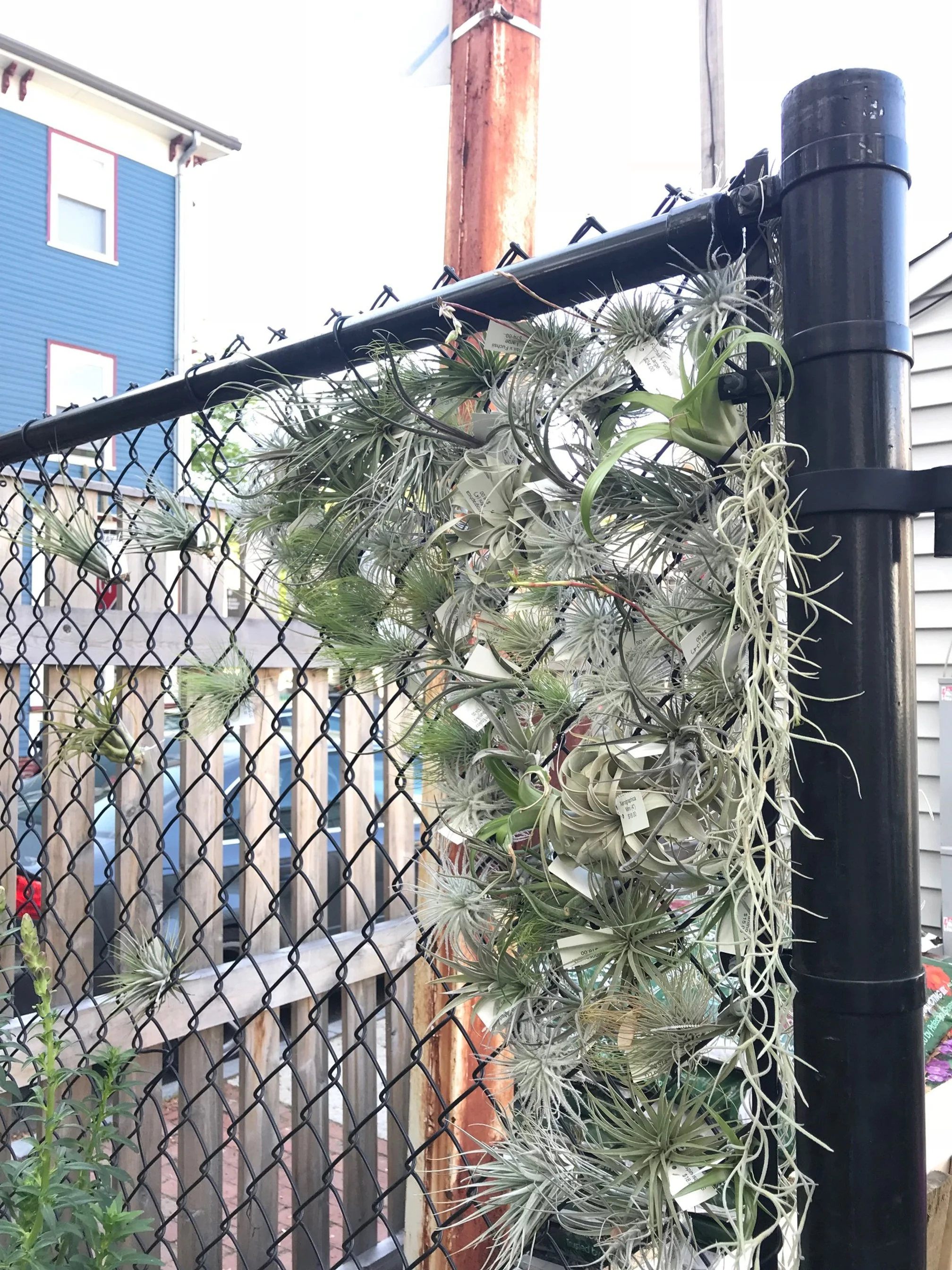
-Pop airplants into tree branches or even a fence
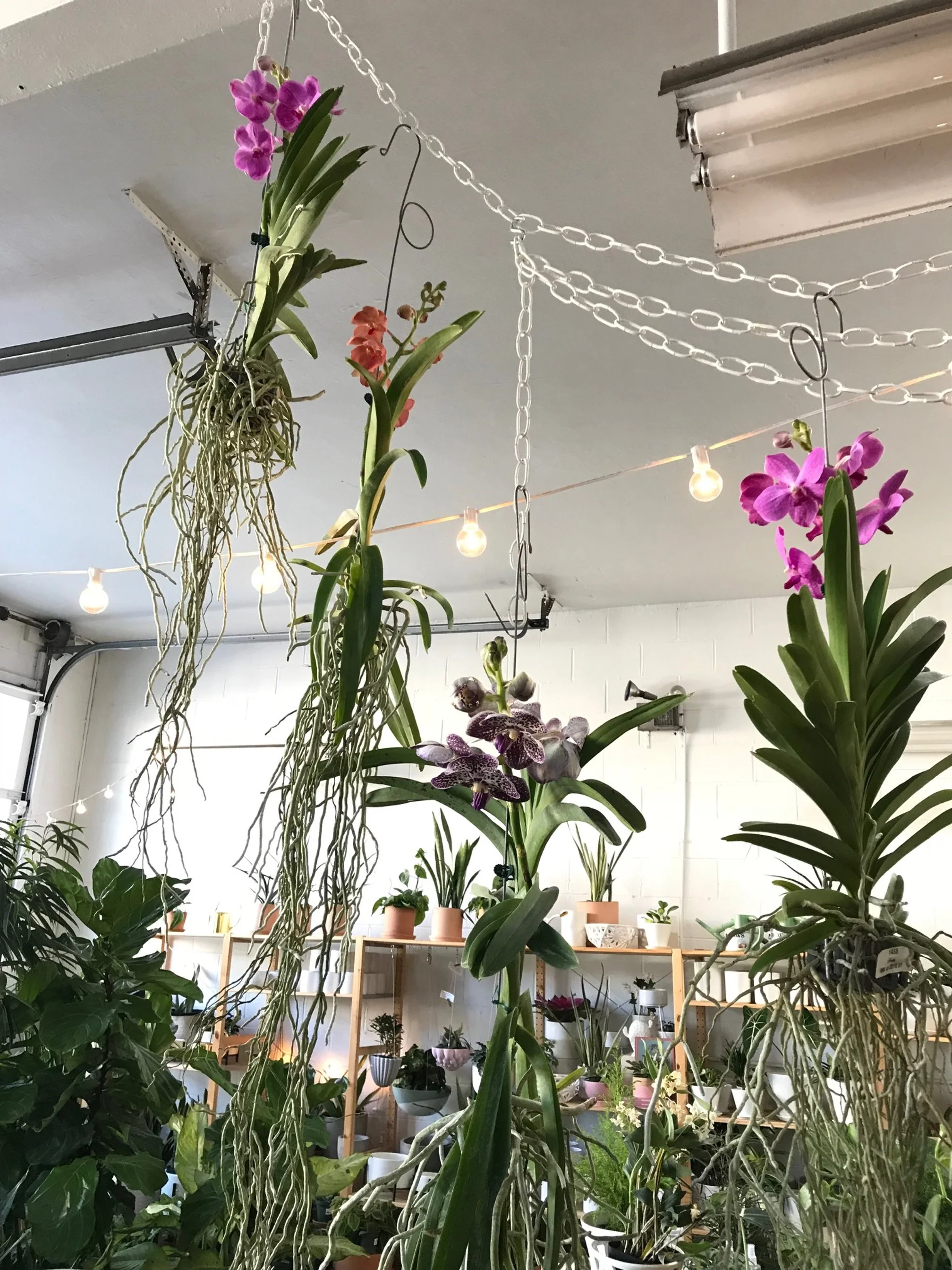
-Hang potted orchids from the upstairs neighbor’s deck
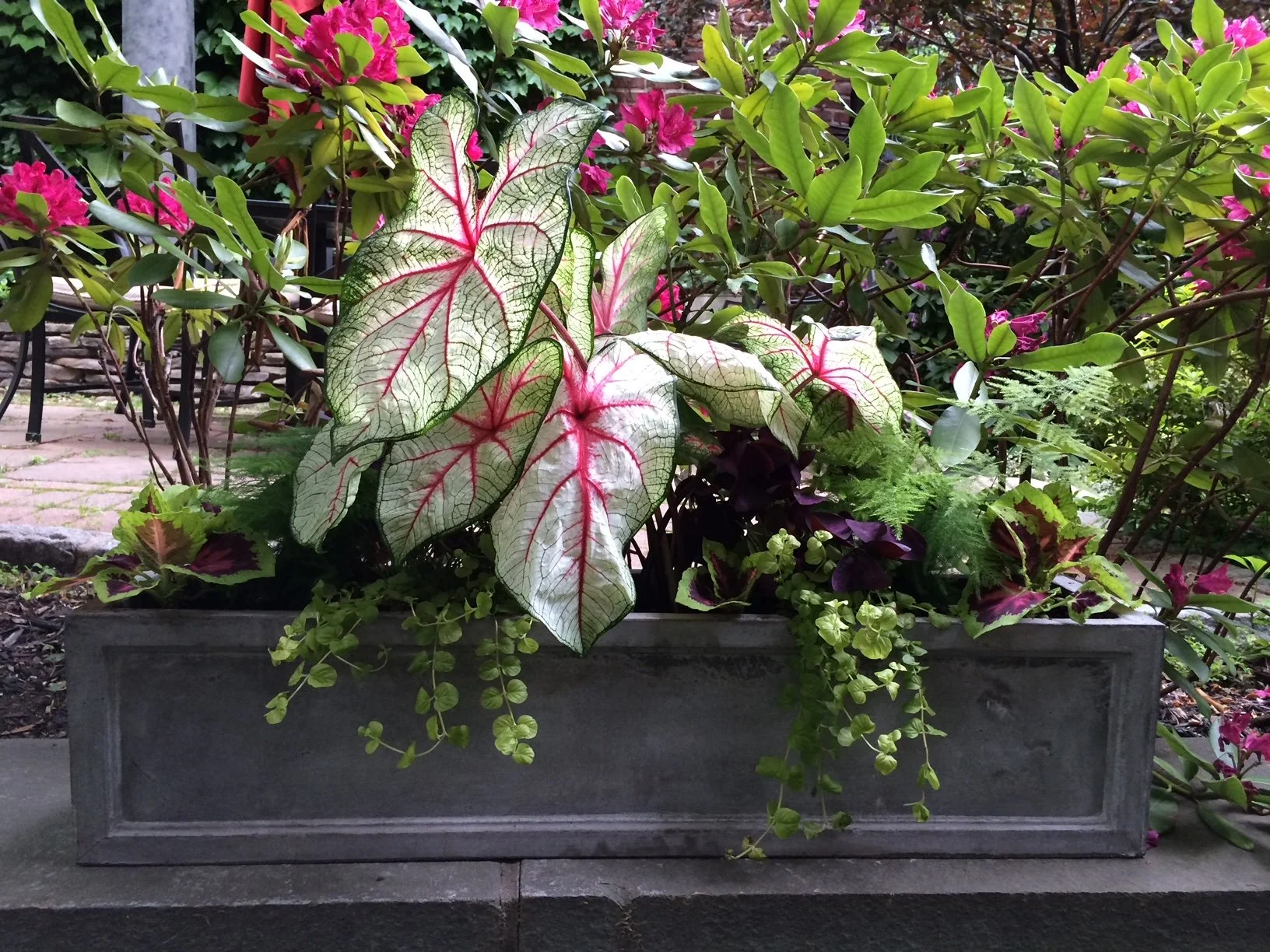
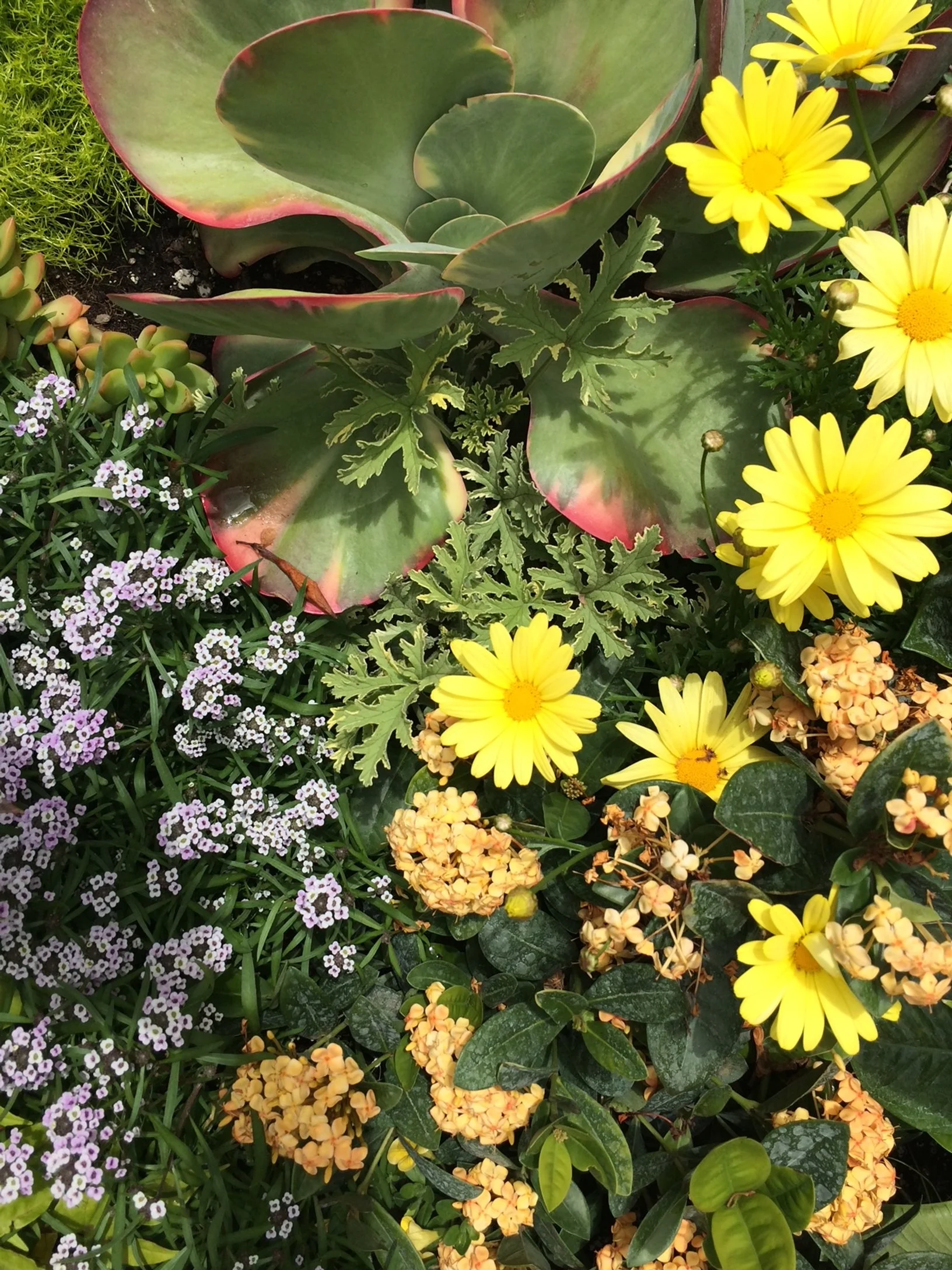
-Pop some flowering annuals in with your tropicals to add more color
-Wrap your ficus with lights
-Finally, hang mounted Staghorn ferns with no fear of watering day!
Bringing houseplants outdoors requires a slightly different awareness, but essentially follows the same rules as growing them indoors. Always consider the environment, and don’t forget to observe your plant. Checking in a few times a week can detect most potential problems.